Local Woman’s Leadership Strengthens Seedling Production in Southern Bahia, Brazil
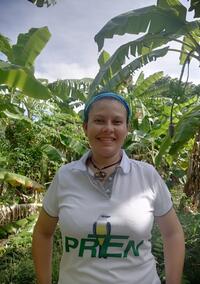
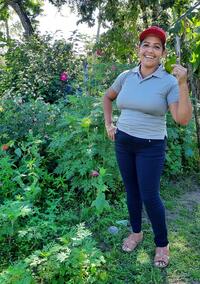
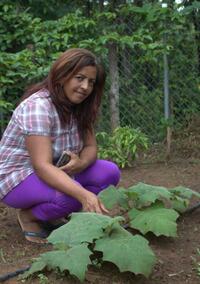
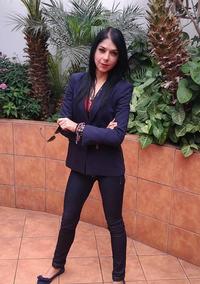
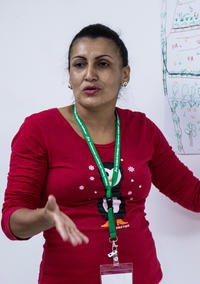
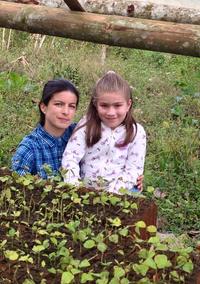
At Nova Vitória Rural Settlement in Eunápolis, southern Bahia, Souza dos Santos is putting her longtime dream into action: She is producing plant seedlings to meet local demand while generating income. In a region where many contend with by food insecurity and lack of potable water, Souza dos Santos’ initiative represents hope for autonomy for the community.
The settlement is home to 64 families, each on a plot of about 5 hectares that includes farmland and conservation areas. Officially created in 2015, the settlement resulted from negotiations mediated by the Bahia state government to resolve a land conflict that began in 2011 over land previously owned by a large company. In an innovative move, land titles were registered in women’s names, recognizing their central role in agriculture and family sustenance. This practice reflects the fact that in Brazil, nearly half of households are headed by women, often in vulnerable contexts, who bear sole responsibility for childcare and household support.
Data from 2023 show that 84% of settlement families faced some degree of food insecurity, and almost none had access to potable water. In this scenario, family farming is more than a livelihood—it’s survival. Souza dos Santos has lived in the settlement for 11 years and has long dreamed of having a seedling nursery. “I’ve always loved producing seedlings, especially native and fruit trees,” she says. Before the COVID-19 pandemic, she managed to set up a simple makeshift structure, but the lack of resources prevented expansion. And, as a low-income single mother with two young children, she couldn’t leave the settlement to work in town.
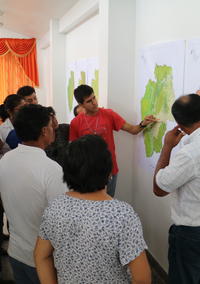
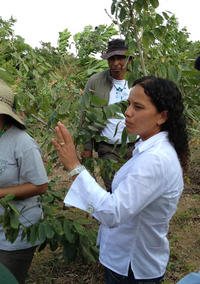
The turning point came when Souza dos Santos participated in three courses that equipped her with the knowledge and skills she needed to carry out her dream. The courses—Agroforestry Planning (2023), Essential Oil Production (2024), and Agroforestry Systems Management (2024)—were offered by ELTI-Institute for Ecological Research in partnership with Instituto Fotossíntese and the Socio-Environmental Development Project for Family Farming, which is led by the Pau-Brasil Center of Studies in Agroecology and Organic Production at the Federal University of Southern Bahia (UFSB). In addition to providing technical training, the courses opened doors to financial support and mentorship. Souza dos Santos was able to develop the nursery through the Environmental Leadership Program.
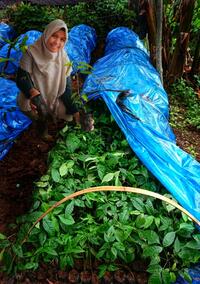
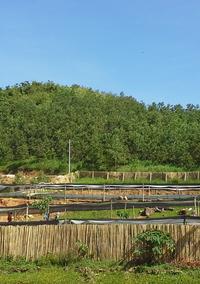
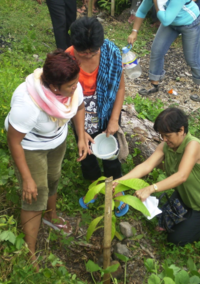
With this support, Souza dos Santos set up a well-structured nursery capable of producing 4,300 seedlings every four months and 1,200 large cacao seedlings annually—about 14,100 seedlings per year. “I learned that we can plant several species together, creating shade, green manure, and windbreaks. That’s new to me and very interesting,” she says. The nursery allows her to balance childcare with income generation from her own land.
In addition to the nursery, Souza dos Santos grows cassava and bananas, low-maintenance crops that help ensure food security and supplement her income. When fully operational, the nursery will meet local demand for seedlings used in agroforestry systems, orchards, productive home gardens, and restoration areas within and around the settlement. The initiative is a step toward productive autonomy for local families. In an area where nurseries are far away and shipping costs make seedlings expensive, Souza dos Santos’ project has the potential to both strengthen the local supply chain and promote agroecological practices.
by Mabel Ludka, updated January 8, 2026
I’ve always loved producing seedlings. With the program’s support, I’m implementing my nursery—something I’ve always dreamed of doing to strengthen our production and improve life here."
Geiza Souza dos Santos