Search form

  • Contacto
Home
  • Donate
  • News
  • Resources
  • Library
  • About
    • Approach
    • Comité Directivo
    • Work
      • Programs
      • Locations
      • Themes
    • Partners
  • Impacts
  • Projects
  • Events
  • Certificate
    • TFL Certificate Program
    • TFL Project Incubator

You are here

Home

ELTI Participant Uses Data to Fight Climate Change and Biodiversity Loss in Kenya

In many parts of the world where humans and wildlife live in close proximity, wildlife is often viewed as a nuisance.

Growing up in Tetu village, at the edge of Kenya’s Rumuruti Forest, Ceciliah Mumbi experienced this firsthand. “Life unfolded alongside the wild,” she says. At night, she could hear elephants raiding crops and hyenas and leopards preying on livestock. Village members needed to adapt to the challenges of living close to nature, especially as the effects of deforestation and forest fragmentation due to human population pressure increased. On a school trip at the age of 10, Mumbi visited Sweetwaters Game Reserve, where she saw a Northern white rhinoceros for the first time. From then on, determined to try to shift how interactions with wildlife are perceived, she dedicated her studies and career to natural resource management.

Mumbi started her career as a wildlife monitor and researcher with the privately owned wildlife conservancy Solio Ranch in Kenya, where she monitored and collected data on its lion and rhino populations. She quickly learned that her strength was fieldwork. In 2022, Mumbi joined Natural State as a biodiversity field researcher, where her focus shifted from monitoring wildlife to monitoring biodiversity and carbon. Natural State sponsored her participation in an online GIS course, through which she strengthened her geospatial analysis skills and gained a deeper appreciation for transforming field data into meaningful insights and visualizing them through maps to facilitate effective communication with diverse audiences. Mumbi says, “Maps say a lot without saying anything at all.”

Mumbi learned about ELTI’s Tropical Forest Landscapes (TFL) online certificate program from her  Natural State colleagues and enrolled in the 2024–2025 program. She was eager to learn project planning skills in the Capstone course and more about engaging with stakeholders during the People course.

Since finishing the program, Mumbi has begun to implement her capstone project. She worked out an agreement with a local landowner whose land had previously been used for agriculture but over time had become degraded, and with the help of community members employed by the landowner she planted acacia seedlings, fruit trees, and native grass seed. She has implemented a long-term monitoring plan, including gauging the social impact, measuring changes in the landscape, and recording the species inhabiting the land. Beyond carrying out her capstone project, Mumbi has continued to apply the participatory approaches she learned in the TFL program by using maps to communicate project progress and monitoring results. Mumbi has developed a map showing a project's scope and sampling points, including the geolocation of every tree planted along the fence line. These maps make complex field data easier for stakeholders and community members to understand.

Mumbi says that participating in the certificate program and engaging with program mentors and instructors has opened new doors for her beyond the implementation of her capstone project. She is contributing a chapter on biodiversity credits to Yale School of the Environment senior research scientist Florencia Montagnini’s upcoming book. She traveled to New Haven, Connecticut, to take part in an ELTI workshop, “Integrating Forest and Carbon Monitoring and Training in Tropical Landscape Conservation and Restoration Projects.” The TFL program also encouraged her to resume her studies and start a master's program in Geoinformation Science and Earth Observation at the University of Twente, Netherlands. Mumbi has come far from her childhood visit to Sweetwaters Game Reserve. She aspires to be a data analyst, using data to develop actions items for fighting climate change and addressing other environmental issues. Mumbi believes that when you have the simplest way to understand an issue, it is much easier to implement solutions.

by Abby York, updated July 16, 2026


If we want to include everyone in implementing climate solutions, we need to talk a language that is not science. I want to share data and models that my grandmother can understand."

Ceciliah Mumbi
Mumbi and a Natural State colleague collect field data for functional trait sampling.
Natural State
Ceciliah Mumbi speaks about above-ground carbon and biodiversity monitoring during a presentation for visitors at Natural State.
Natural State

ELTI Participant Uses Data to Fight Climate Change and Biodiversity Loss in Kenya

Local Woman’s Leadership Strengthens Seedling Production in Southern Bahia, Brazil

Reviving the Azuero Peninsula through Community-Driven Forest Restoration and Sustainable Farming

Restoring Mangrove Ecosystems Through Community Leadership in Indonesia

Strengthening Sustainable Agriculture in Bahia through Policy, Knowledge, and Networks

Protecting Maridan’s Mangroves through Community-Based Ecotourism

Community-Led Mangrove Restoration in Balikpapan Bay

Integrating Food Systems and Conservation Programs

Supporting a Local Community’s Reforestation Efforts in Panama’s Azuero Peninsula

Man standing next to a papaya tree.

Striving for Farm Resiliency in Panama’s Dry Arc

Responding to Humanitarian and Environmental Emergencies in Refugee Camps of Bangladesh

Agroecology as an Alternative: Promoting Agroecological Home Gardens in Brazil

Supporting Honey Production to Help Conserve Mangrove Forests

Exploring Forest Landscape Restoration by Birds

Leading People with Disabilities in Rainforestation Initiatives

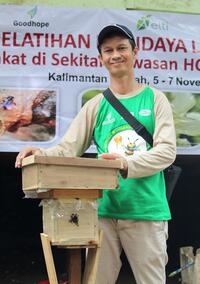
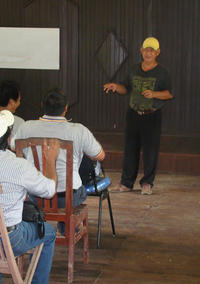
Man in green shirt and baseball cap stands at a podium

Promoting Conservation Efforts in Oil Palm Plantations

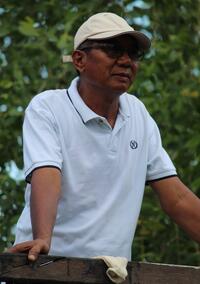
PIcture of a man in a white polo shirt and baseball cap

Donating Land for Proboscis Monkey Habitat Restoration

Utilizing silvopastoral and agroforestry systems to create a climate-smart farm in Panama’s La Villa River Watershed

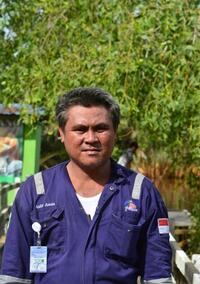
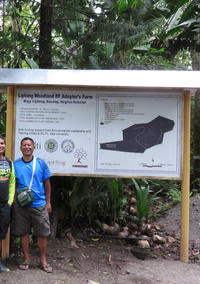
Man (Pak Andung) on blue shirt in the center of the image. Background are mostly green leaves and a portion of a sign on the left of the image.

Using Eucalyptus as an Alternative Livelihood to Conserve Proboscis Monkey Habitat

Environmental Education through Rainforestation

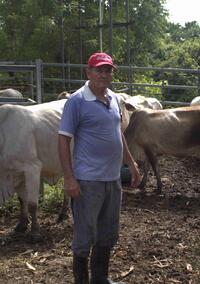
Arnulfo Lasso stands in front of one of the many living fences in the farm, including a large tree behind him.

Increasing the Resilience of Cattle Farms in Panama’s Santa María River Watershed

Woman in blue shirt and hat standing in front of field of grass. A tree with green leaves is above her head.

Adopting Silvopastoral Practices to Create Resilient Livestock Systems in Panama’s Azuero Peninsula

Rainwater harvesting table, a white, thin table sitting outside in the sun. It's surrounded by trees and connected to a blue tank for collecting the rainwater.

Utilizing Innovative Rainwater Harvesting Approaches to Improve Livestock Drinking Water Quality and Security

Rainwater Harvesting as a Strategy for Climate Change Adaptation in Panama’s Azuero Peninsula

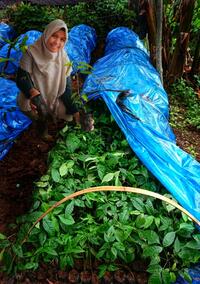
Nursery monitoring activities. Sorting the seeds that are ready to be opened from the plastic cover and waiting for enlargement until they are ready for planting. Covering is needed after the seedlings are transferred to polybags.

Working with the Villagers of Pesanguan to Restore Forests in the Bukit Barisan Selatan National Park

Oil Palm Plantation Staff Member Promotes Beekeeping in Indonesia

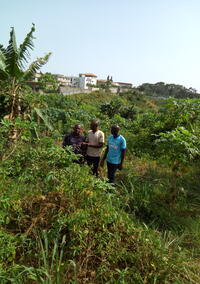
Visit to a plot of the classified forest of Anguédédou located in the Abidjan district.

Côte d’Ivoire Turns Ideas into Action Using ROAM

Restoration with native species is helping to bring back ecosystems in the Philippines

All of the participants at the house of Nirana-Clavellinas.

Second Hands-on Training for Landslide Prevention and Restoration in the Colombian Andes

The mosaic of land uses in Ucayali (Peruvian Amazon).
Peru's National Restoration Efforts Gather Momentum

World Bank Participants Champion ROAM to Peers

Moses conducting a water quality assessment in Rwizi catchment, southwestern Uganda

Farmers in Northern Uganda Sow Seeds for Future Resilience

Philippines' Forest Management Bureau Adds Forest Landscape Restoration Techniques

Denise Margaret Matias

Honey Bee Habitat Restoration in the Philippines Receives International Prize

Malawi Invests in Resilient Landscapes with National ROAM Assessment

Regional Forester Connects with National Peers, Scales Up Restoration Efforts in Peru

Restoring the Rich Forests of Negros Island in the Philippines

Making Environmental Policy in Southern Mexico More Inclusive

Honduras Enriches Diversity of Restoration Techniques for its National Plan

Raising Awareness about FLR Opportunities in Pará, Brazil

Burundi Builds Coordination Between Organizations Implementing FLR

Restoration Supports Colombia's Peace Process

Eastern and Southern African Countries Implement and Collaborate on FLR

Leading Local Stakeholders toward Landslide Prevention in the Colombian Andes

Burundi Steps Towards a More Holistic Approach on FLR Planning and Policy

Santiago

Environmental Restoration Consultant Supports Local Projects in Critical Area of Colombia

Supporting Women Environmental Leaders in Panama’s Azuero Peninsula

Turtle Habitat Restoration In Colombia Receives Global Attention

Mobilizing Neighbors to Rehabilitate Coal Mine Sites in Indonesia

Paddy Field School Helps Restore Mangroves and Economy on Tanakeke

Bringing Structure to Colombia’s Restoration Efforts

Adriana Giraldo

Engaging Younger Generations to Restore Colombian Andean Landscapes

Mauricio Carvajal

Applying Restoration Strategies Learned In Training

Odielca Solis

Empowering Women to Lead Sustainable Ranching and Forest Restoration

Belgis Madrid

Farmers Inspire Farmers to Improve Conventional Practices

Víctor Galindo

Forest Restoration in the Cali River Watershed

Mr. Armando Muñoz

Smallholder Agroecology in the Dry Arc of Panama

Climaco Marciaga and Jose Olguín González discuss restoration strategies during an ELTI field course on tropical forest restoration

Forest Restoration in La Villa Watershed

Banjar Yulianto

Coal Mining Companies Get Help Rehabilitating Their Sites

Pol Carino and Rene Vendiola

Rainforestation Benefits Ripple Out from ELTI Trainings

Vincent B. Concio

Replacing Exotic Monocultures with Native Tree Species

Eufracio Moratas

Mobilizing the Grassroots for Forest Restoration

Assisting with the UWCSEA Rainforest Restoration Program

Rehabilitating Mangroves after Typhoon Haiyan

Redirecting the Philippines' National Greening Program

Restoring the Lawigan Watershed with Native Trees

Rochim Auliandra

Forest Encroachers Become Partners In Indonesia

Ishak Yassir and Rehab specialist from in front of experimental site Singlurus

Restoring Damage from Coal Mining in East Kalimantan

Severino Rodrigo Riveiro Pinto lecturing to participants

Influenciando la Política de Estado sobre Pago de Servicios Ambientales en la Mata Atlántica Brasilera

APASPE member sharing his experiences with course participants in his farm

Apoyando Comunidades Locales en el Ecosistema de Bosque Seco en Panamá a Integrar Prácticas de Restauración de Bosques en Paisajes Agrícolas

esp ALT

Mitigando del Daño por Minerîa de Carbón en Kalimantan Este, Indonesia

Obtener ELTI Actualizaciones

Correos electrónicos trimestrales permiten saber sobre los últimos esfuerzos de ELTI .

TRIC

Visita nuestra tropical Reforestación con Especies Nativas Information Clearinghouse para liberar recursos.

Programs

  • Field Training Program
  • Online Training Program
  • Leadership Program

Nuestros Impactos

  • Africa Stories
  • Neotropics Stories
  • Tropical Asia Stories

Más

  • About ELTI
  • Where We Work
  • Focal Themes
  • Resources
  • News

Contáctenos

Liderazgo Ambiental & Iniciativa para la Formación (ELTI)

205 Prospect Street

New Haven, CT 06511

Tel: (1) 203-436-9246

Envíenos un correo electrónico

Singapore oficina

Panama oficina

  •  
  •  
  •  
  •  
  •  

ELTI is an initiative of:

ELTI was created with a generous grant from:

Copyright © 2015 Environmental Leadership & Training Initiative | All rights reserved. | Yale University Privacy Policy | Website design by Red Lemon Creative