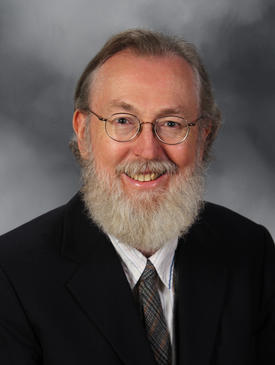

David Cordero-Heredia, J.S.D.
Visiting Professor
David Cordero-Heredia is a Visiting Professor at the Yale School of the Environment.
At Pontificia Universidad Católica del Ecuador, he served as a Professor of Law, Director of the Human Rights Clinic, Director of the Clinical Program, and Director of the Law Journal (RFJ). From 2018 to 2019, he was a Senior Teaching Postdoctoral Fellow at Cornell Law School, where he co-taught the International Human Rights Clinic: Policy Advocacy. His research examines the interaction between social movements and the law, with a particular focus on the implementation of the rights of nature and the participation of Indigenous peoples.
Professor Cordero-Heredia has taught Constitutional Law, Indigenous Peoples’ Rights, Social Movements and the Law, Sociology of Law, Inter-American Human Rights System, Constitutional Litigation, Human Rights Clinic, and International Human Rights Law at various universities in Ecuador. He is also a dedicated human rights advocate, representing Indigenous peoples from Ecuador and Colombia before the Inter-American Human Rights System. In 2022, he was part of the legal team that brought the case of the Indigenous Peoples in Voluntary Isolation (Tagaeri and Taromenane) before the Inter-American Court of Human Rights.
Professor Cordero-Heredia holds a Doctor of the Science of Law (J.S.D.) and a Master of Laws (LL.M.) from Cornell University; a Master of Science in Constitutional Law from the Universidad Andina Simón Bolívar (Ecuador); a Master of Laws in Human Rights, Democracy, and the Rule of Law from the Universidad de Alcalá (Spain); and a Bachelor of Laws from the Pontificia Universidad Católica del Ecuador (Ecuador).
I feel truly fortunate to have had the opportunity to work with Indigenous peoples of the Amazon basin. I deeply believe in the incredible potential of their ancestral knowledge to protect the future of the planet."
Prof. David Cordero-Heredia, J.S.D.